Which of the Two Major Types of Glands Is Ductless?—A Deep-Dive into Endocrine Architecture, Function, and Clinical Relevance

1. Introduction

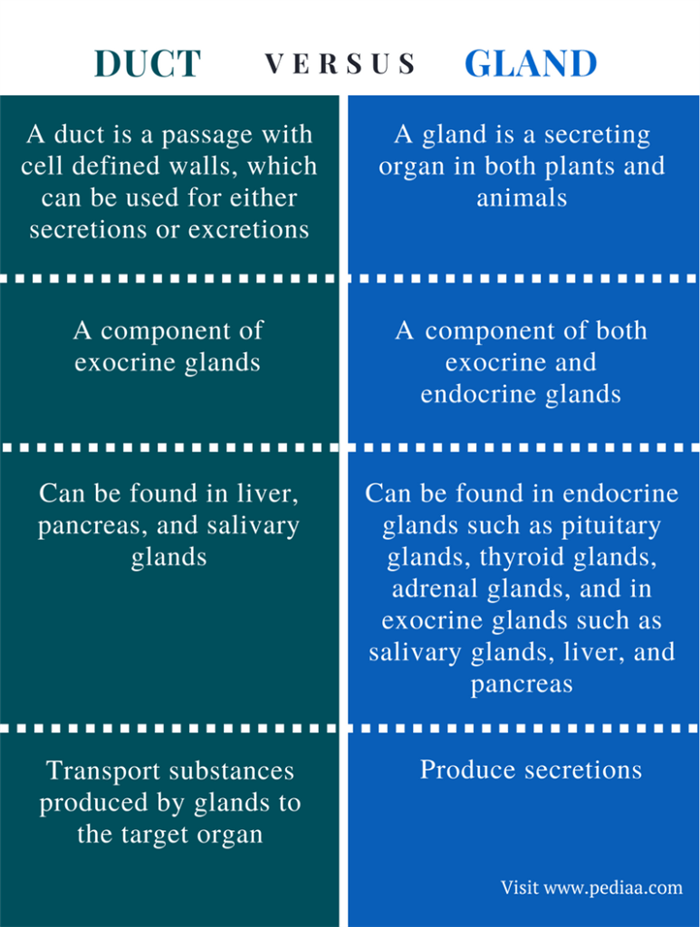
Nearly every physiologic conversation in the human body—growth spurts during adolescence, palpitations under stress, the warmth you feel after a meal—begins with a chemical whisper from a gland. Broadly speaking, glands fall into two major structural categories: exocrine glands, which secrete their products through ducts to an epithelial surface, and endocrine glands, which lack ducts and instead release hormones directly into the circulatory or interstitial fluid. The ductless group is therefore the endocrine glands, a network that operates as the body’s internal broadcasting system, sending hormonal messages that coordinate metabolism, development, reproduction, and many other processes.

Understanding why endocrine glands dispense with ducts—and how their duct-free design shapes their architecture, pharmacology, and disease patterns—requires an exploration of form, function, and feedback that spans cell biology and clinical medicine. This article delivers that exploration, guiding you from microscopic anatomy to systemic physiology and, ultimately, to bedside implications.


2. Terminology Primer: Exocrine vs. Endocrine

ParameterExocrine GlandsEndocrine Glands (Ductless)
Primary outputEnzymes, mucus, sweat, sebum, milk, bileHormones (peptide, steroid, amino-acid derivatives)
Delivery routeThrough ducts to skin, GI lumen, or body cavitiesDirectly into blood or lymphatic capillaries
Target rangeLocal or luminalSystemic (often multiple organs)
Onset/duration of effectRapid, transientRapid to delayed, but often prolonged
ExamplesSalivary, sweat, mammary, Brunner’s glandsPituitary, thyroid, adrenals, pancreatic islets

While exocrine glands resemble tiny plumbing systems—comprising secretory acini connected to ducts—endocrine glands are more like sponges richly perfused by sinusoids, allowing secretory cells to sit in intimate contact with fenestrated capillaries. This structural arrangement is crucial for their ductless mode of operation: because hormones must diffuse quickly into the bloodstream, endocrine tissues evolve a high capillary density, thin basal laminae, and often fenestrated endothelia.


3. Anatomy of the Major Endocrine Glands

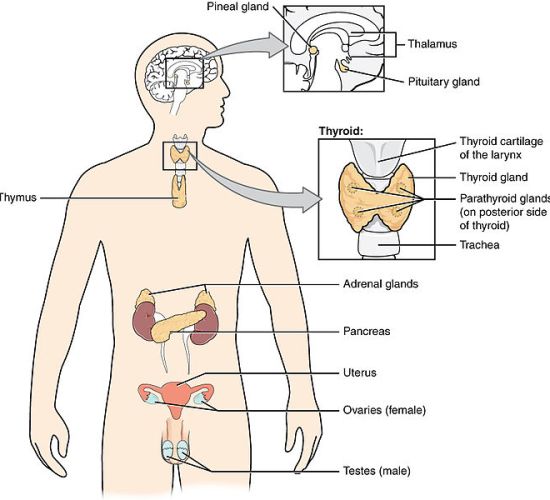
  1. Hypothalamus – A neuroendocrine hub that synthesises releasing and inhibiting hormones (CRH, TRH, GnRH, etc.) controlling the pituitary.
  2. Pituitary (Hypophysis)
    • Anterior lobe (pars distalis): secretes growth hormone (GH), thyroid-stimulating hormone (TSH), ACTH, FSH, LH, and prolactin.
    • Posterior lobe (neurohypophysis): stores and releases hypothalamic hormones oxytocin and vasopressin (ADH).
  3. Thyroid – Bilobed gland in the anterior neck producing thyroxine (T₄), triiodothyronine (T₃), and calcitonin.
  4. Parathyroids – Typically four pea-sized glands behind the thyroid, secreting parathyroid hormone (PTH) for calcium homeostasis.
  5. Adrenal Glands
    • Cortex: synthesises cortisol, aldosterone, and adrenal androgens.
    • Medulla: chromaffin cells secrete catecholamines (epinephrine, norepinephrine).
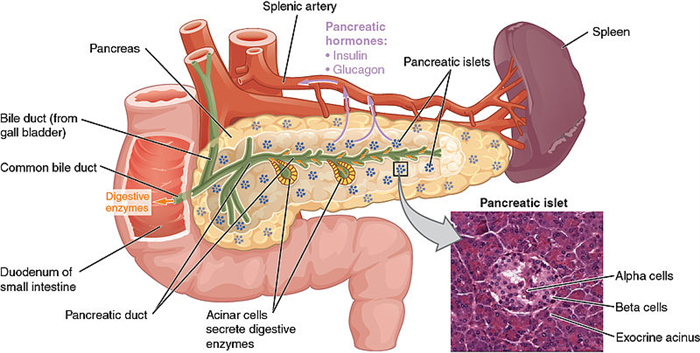
  6. Pancreatic Islets (Islets of Langerhans) – Scattered micro-organs within the exocrine pancreas, releasing insulin, glucagon, somatostatin, and pancreatic polypeptide.
  7. Gonads – Ovaries and testes, producing sex steroids and inhibins/activins.
  8. Pineal – Secretes melatonin, modulating circadian rhythms.
  9. Placenta (temporary) – Produces hCG, estrogen, progesterone, and human placental lactogen during gestation.
  10. Diffuse endocrine tissue – GI enteroendocrine cells (GLP-1, gastrin, ghrelin), adipose tissue (leptin, adiponectin), cardiac atria (ANP), kidneys (renin, erythropoietin).

4. Evolutionary Logic of a Ductless System

Why would evolution favor a duct-free design for hormones? There are several advantages:

  • Systemic Reach: Ductless secretion allows a single gland to influence distant organs within seconds to minutes, enabling integrated responses—e.g., an adrenal cortisol surge mobilizing glucose, suppressing immunity, and altering cognition simultaneously.
  • Dilution and Reservoir Effects: Hormones enter a vast vascular compartment. Binding proteins (e.g., cortisol-binding globulin) act as buffers and reservoirs, smoothing out fluctuations and extending half-life.
  • Fine-Tuned Feedback: Circulating hormone concentrations can be sensed by hypothalamic or pituitary receptors, closing feedback loops that would be impossible if hormones were dumped into an external duct.

5. Cellular Microenvironment of Endocrine Tissue

Endocrine cells demonstrate several distinctive histologic features:

  1. Polyhedral Shape & Gap Junctions: Permit three-dimensional clustering and intercellular communication.
  2. Prominent rER & Golgi (for peptide hormones): Reflect high synthetic activity.
  3. Lipid Droplets & SER (for steroid hormones): Provide substrates and enzymes for cholesterol metabolism.
  4. Fenestrated Capillaries: Endothelial pores allow rapid hormone entry into circulation.
  5. Basal Lamina Discontinuities: Shorten diffusion distance.

For example, chromaffin cells in the adrenal medulla sit within a sinusoidal network so permeable that epinephrine reaches the venous outflow within seconds of sympathetic stimulation—a critical design for fight-or-flight responses.


6. Hormone Biosynthesis Pathways

  • Peptide Hormones – Transcription → translation of pre-prohormone in rough ER → cleavage in Golgi → storage in secretory granules → exocytosis triggered by Ca²⁺ influx (e.g., insulin).
  • Steroid Hormones – Cholesterol uptake or synthesis → modification by cytochrome P450 enzymes in mitochondria and smooth ER → diffusion through plasma membrane upon synthesis (e.g., cortisol).
  • Amine Hormones – Tyrosine or tryptophan substrates → enzymatic hydroxylation, decarboxylation, iodination (thyroid) → storage in vesicles (catecholamines) or thyroglobulin colloid (T₄/T₃).

The absence of ducts imposes strict regulatory checks: for peptide hormones, exocytosis is calcium- and cAMP-dependent; for steroids, synthesis is rate-limited by StAR protein and P450 side-chain cleavage.


7. Hormone Transport and Signal Transduction

After endocrine cells release hormones, the molecules experience three possible fates:

  1. Free circulation (small peptides, catecholamines).
  2. Carrier-bound transit (lipid-soluble steroids, thyroid hormones).
  3. Local degradation (paracrine peptides, eicosanoids).

Upon reaching target tissue, hormones bind receptors:

  • Cell-surface GPCRs or RTKs (for hydrophilic hormones) → second-messenger cascades (cAMP, IP₃/DAG, Ca²⁺, PI3K).
  • Cytoplasmic or nuclear receptors (for lipophilic hormones) → direct DNA binding to hormone-response elements → transcriptional modulation.

The combination of ductless release, vascular transport, and receptor specificity yields precision with distance: thyroid hormone accelerates nearly every cell’s metabolism, while parathyroid hormone zeroes in on bone and kidney.


8. Feedback Loops: Guardrails of Endocrine Physiology

The ductless endocrine network would spiral into chaos without feedback mechanisms. The classic model is negative feedback:

  1. Hypothalamus releases TRH
  2. Pituitary releases TSH
  3. Thyroid releases T₄/T₃
  4. Elevated T₄/T₃ inhibit TRH and TSH secretion.

Positive feedback occurs rarely but decisively—for instance, estrogen’s pre-ovulatory stimulation of LH surge.

Other modulators include:

  • Autocrine control (ACTH’s effect on its own corticotrophs).
  • Intra-pituitary paracrine signals (activin, follistatin).
  • Neuroendocrine reflexes (suckling → oxytocin/prolactin release).
  • Circadian rhythms (SCN → melatonin, cortisol rhythms).

9. Clinical Implications of Ductless Design

Because endocrine glands secrete directly into an open vascular system, circulating hormone levels serve as real-time biomarkers. However, this same vascular exposure leaves glands vulnerable to:

  • Autoimmune attack (Hashimoto’s thyroiditis, Addison’s disease).
  • Metastatic seeding (thyroid metastasis from renal cell carcinoma).
  • Ischemic injury (Sheehan’s postpartum pituitary necrosis).

Moreover, systemic dispersion means that hormone excess or deficiency produces multi-organ syndromes: cortisol excess modifies skin, muscle, bone, and cognition; insulin deficiency deranges carbohydrate, lipid, and protein metabolism.


10. Disorders Highlighting Endocrine (Ductless) Physiology

GlandHyperfunctionHypofunctionSpecial Note
PituitaryAcromegaly (GH), Cushing’s disease (ACTH)PanhypopituitarismPituitary tumors can compress optic chiasm.
ThyroidGraves’ diseaseHashimoto’s, iodine deficiencyThyroid hormones cross placenta; fetal brain reliant on maternal supply in 1st trimester.
Adrenal CortexCushing’s syndrome, Conn’s (aldosterone)Addison’s diseaseAdrenal crisis a medical emergency.
ParathyroidsPrimary hyperparathyroidismHypoparathyroidismCalcium emergencies (stones, bones, groans, thrones, psychiatric overtones).
Pancreatic IsletsInsulinomaType 1 diabetesIslets transplanted into portal vein show promise for brittle diabetes.

Each pathology underscores the fact that ductless release amplifies systemic impact; an insulin-secreting tumor millimeters in diameter can induce life-threatening hypoglycemia.


11. Endocrine–Exocrine Interplay: A Case Study in the Pancreas

The pancreas is an elegant example where ductless and ducted functions coexist:

  • Exocrine acini: secrete digestive zymogens via the pancreatic duct into the duodenum.
  • Endocrine islets: release insulin/glucagon into the portal circulation.

Endocrine signals modulate exocrine output (insulin amplifies CCK-stimulated enzyme secretion), while exocrine diseases (chronic pancreatitis) can damage islets, leading to type 3c diabetes. Such cross-talk highlights the functional complementarity of the two glandular architectures.


12. Therapeutic Horizons Leveraging Ductless Physiology

  1. Recombinant Hormones – Insulin analogs, biosynthetic PTH, growth hormone.
  2. Receptor Agonists/Antagonists – GLP-1 agonists for diabetes, GnRH antagonists for prostate cancer.
  3. Gene & Cell Therapy – CRISPR correction of monogenic endocrine defects; stem-cell derived islet transplantation.
  4. Nanomedicine & Pulsatile Pumps – Closed-loop insulin pumps emulate physiologic ductless secretion profiles.
  5. Radio-labelled Ligand Therapy – Lutathera® targets somatostatin receptor–positive endocrine tumors.

Clinical success hinges on mimicking or modulating the natural endocrine delivery—precisely because hormones are designed to act systemically without ducts.


13. Conclusion

To answer the titular question succinctly: the ductless glands are the endocrine glands. Yet that simplicity belies a sophisticated biological architecture in which hormone-secreting cells, fenestrated capillaries, binding proteins, and receptor-mediated feedback coalesce into a finely tuned command-and-control network. By functioning without ducts, endocrine glands wield influence far beyond their size, orchestrating the physiology of multiple organs simultaneously. When the system falters—through genetic mutation, autoimmune assault, tumor growth, or environmental disruption—the clinical manifestations are equally systemic.

For clinicians, scientists, and students, appreciating the ductless nature of endocrine glands is more than a taxonomic exercise; it is the starting point for diagnosing complex syndromes, designing targeted therapies, and understanding how the body maintains homeostasis in an ever-changing environment. The next time you palpate a thyroid, adjust an insulin pump, or interpret a hormone panel, remember: it is the absence of ducts that allows these glands to speak in a voice loud enough to be heard from head to toe, deftly guiding the symphony of human life.